New Jersey Future Blog
When Water Holds Back Housing: What to Expect from New Jersey’s New State Fiscal Year 2026 Intended Use Plans
July 15th, 2025 by Jessika Sherman
 The Water, Housing, and Economy Web
As New Jersey faces a growing housing crisis, it’s becoming increasingly clear that water infrastructure is more than just a utility concern; it’s a fundamental barrier to equitable development and housing growth. In an effort to provide more affordable housing options, developers are eager to build, but are held back by outdated or inadequate water and sewer systems. According to local officials, some treatment plants have reached capacity. Without functional and capable water infrastructure, development stalls, affordability suffers, and local economic growth is stunted.
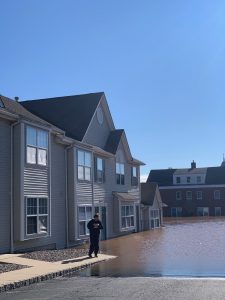
During a water infrastructure and housing panel at the 2025 NJ Planning and Redevelopment Conference, hosted by New Jersey Future and the New Jersey Chapter of the American Planning Association, housing advocates and developers highlighted how aging systems and climate-driven stressors, such as flooding, are undermining both new development and the resilience of existing affordable housing. In towns like Lambertville, Hurricane Ida demonstrated just how quickly flooding can decimate essential workforce housing. Much of the local workforce resides in affordable housing units. When these become flooded, it negatively impacts the local economy. Nearly 25% of affordable homes may be at flood risk by 2050 statewide. Zoning for affordable housing in flood-prone areas, paired with underinvestment in stormwater and sewer upgrades, is a recipe for inequity and economic stagnation.
Smart, strategic public investment becomes essential, and the State Revolving Funds (SRFs) are one of New Jersey’s most powerful tools.
What is the State Revolving Fund?
Administered jointly by the NJ Department of Environmental Protection (NJDEP) and the NJ Infrastructure Bank (I-Bank), the Clean Water and Drinking Water SRFs provide municipalities and utilities with below-market-rate low-interest loans and principal forgiveness to finance critical water and wastewater infrastructure. It’s a vital tool for communities, particularly those with limited financial capacity. Municipalities and systems that meet the affordability criteria are entitled to the most favorable funding packages, such as 100% coverage for project costs through principal forgiveness. The SRFs offer access to financing packages that can support system repairs, lead service line replacements, stormwater upgrades, and more.
The Intended Use Plans (IUPs) outline the policies, funding packages, ranking criteria, and eligibility thresholds for the Clean Water and Drinking Water SRFs. IUPs are updated and published annually.
What’s New in the SFY26 Intended Use Plans?
The IUPs for State Fiscal Year 2026 (SFY26), expected to be finalized soon, contain key updates, especially on how affordability is determined. While financing package structures remain similar to SFY25, NJDEP has updated the data to assess a municipality’s affordability status. The state’s median household income (MHI) rose from $85,245 to $97,126, meaning fewer towns would qualify as “disadvantaged” under the old threshold. To ensure that critical support still reaches the communities that need it most, NJDEP adjusted the eligibility threshold to include the lowest 25% of municipalities by affordability score, which is approximately 141 towns. Previously, a municipality with an affordability score under 80.99 qualified as disadvantaged; now the score has increased to 86.19.
NJDEP established a grandfathering policy to provide consistency for communities already moving through the application process who previously met affordability criteria. Under this policy, if a municipality loses its affordability status but submits a project application or receives technical assistance before this update, it will retain its eligibility under the previous affordability tier. These projects must close within three years to maintain their grandfathered status.
The underlying data sources have also been updated and will continue to be updated every three years. MHI data has been updated from 2019, pre-COVID data, to more recent post-COVID data. Unemployment rate data has also been shifted from county-level to municipal-level data, providing a more accurate and localized measure of economic hardship.
Additionally, the IUPs maintain favorable reforms from SFY25, including:
- Increased NJDEP interest-free loan shares (often 75%) blended with a 25% AAA-rated I-Bank loan
- Eliminated funding package caps
- Planning and design grants of up to $2 million per year for eligible communities participating in technical assistance programs
Why This Matters for Housing Growth
Access to funding isn’t just about water, it’s about people. Without functional water infrastructure, developers can’t build housing, residents face health and flooding risks, and towns miss out on economic opportunity. Even where technology can incrementally expand plant capacity, upgrades are expensive and politically sensitive, especially when ratepayers are already stretched thin.
New Jersey must align its infrastructure investments with its housing and climate goals to build a resilient, equitable future. That means using tools like the SRFs to fix what’s broken and plan for sustainable growth, especially in disadvantaged communities. The SFY26 IUPs signal continued progress toward that vision.
To learn more about the SRFs and the latest IUPs, visit NJDEP’s Water Infrastructure Investment Plan website.
Tags: 2025 NJ Planning and Redevelopment Conference, Affordable housing, aging water systems, Drinking Water and Clean Water State Revolving Funds, funding, Housing, Intended Use Plan, state revolving fund, water infrastructure