New Jersey Future Blog
Trends in Redevelopment Finance: Complexity and Change
March 27th, 2018 by Ed DiFiglia
 “Complexity can be fun.” These parting words from Dave Gibbons, president and chief executive officer of the Elberon Development Group, best summed up the 2018 Redevelopment Forum’s panel on Trends in Redevelopment Finance. In front of a standing-room only-crowd, Jong Sook Nee Esq., co-founder of NeePlata Law LLC, moderated the panel that included Leslie Anderson, executive director of the New Jersey Redevelopment Authority; Valerie Jackson, director of the policy, planning, and development department for the City of East Orange; and Mr. Gibbons. Read the rest of this entry »
County Population Estimates: Return to the Urban Core Continues
March 26th, 2018 by Tim Evans
Exurban counties continue to lose residents, while Hudson County hits a milestone
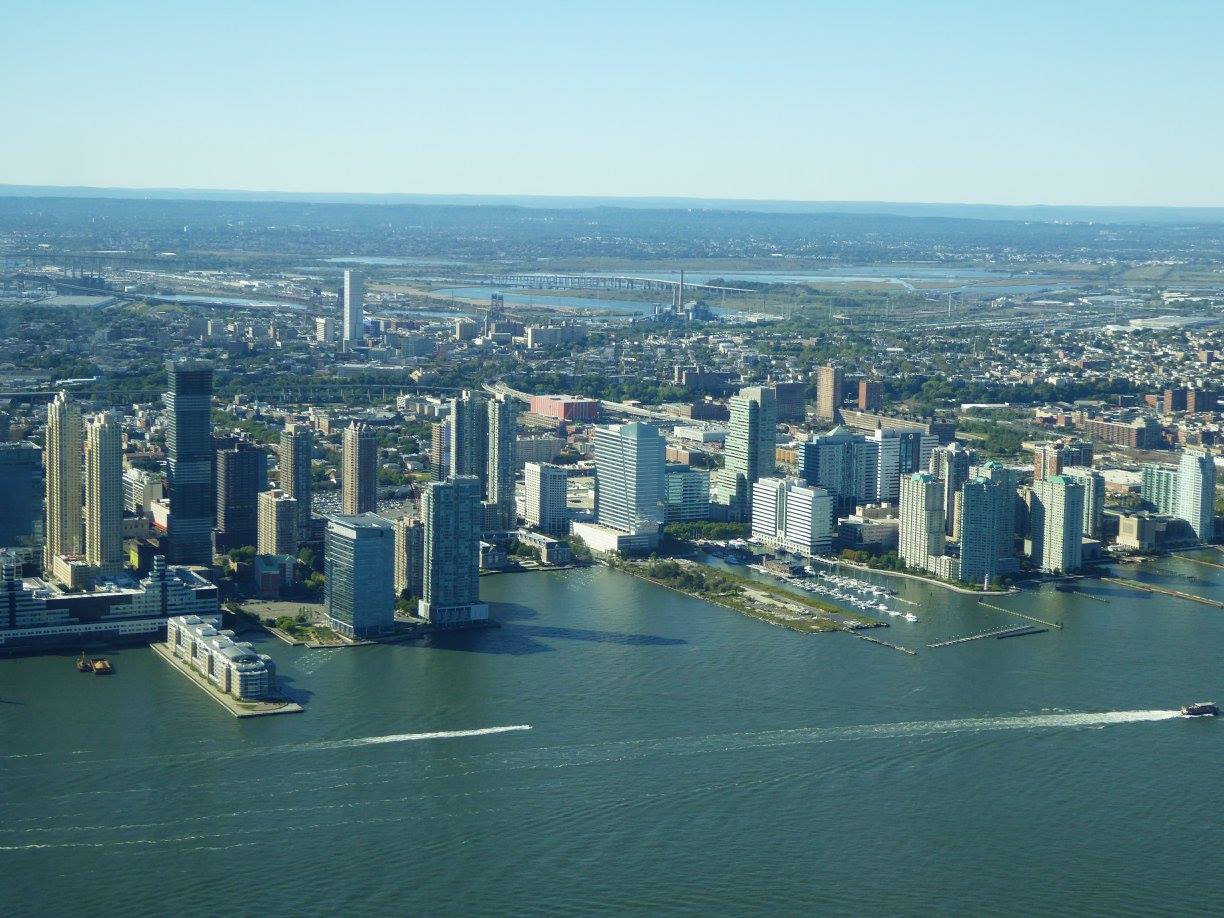
View of Jersey City from lower Manhattan. Hudson County hit a population milestone in the latest Census Bureau estimates of county populations.
According to new Census Bureau estimates, nine of New Jersey’s 21 counties lost population between 2016 and 2017. In descending order of the magnitude of the percentage loss, they are: Cumberland (-0.89 percent), Salem (-0.58 percent), Sussex (-0.43 percent), Cape May (-0.39 percent), Atlantic (-0.34 percent), Monmouth (-0.07 percent), Warren (-0.04 percent), and Camden and Hunterdon, both of which had very small losses that round to 0 percent. All nine of these counties also lost population in the previous year (from 2015 to 2016), although in most cases the 2016-17 loss was smaller than the 2015-16 loss; only Cumberland lost more people from 2016 to 2017 than it had from 2015 to 2016. (One county, Burlington, reversed course and went from losing people between 2015 and 2016 to gaining between 2016 and 2017.) Read the rest of this entry »
Millennials: What Do They Want?
March 20th, 2018 by Emily Eckart
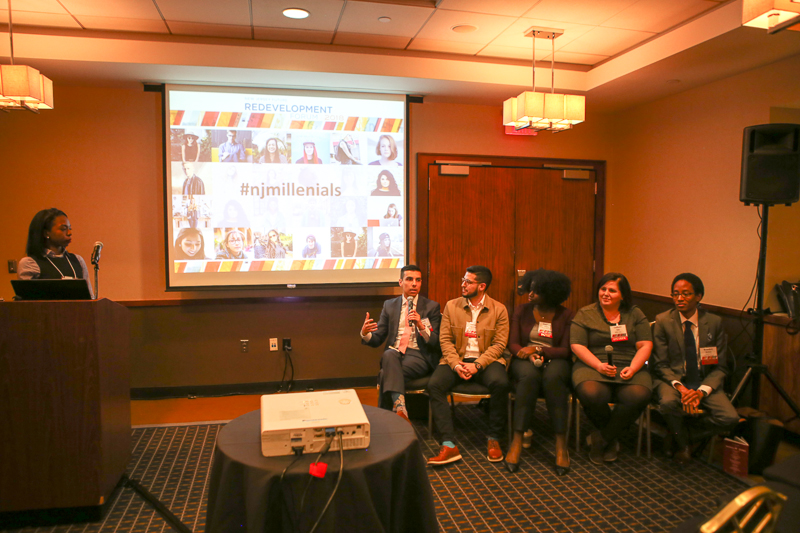 Millennials are New Jersey’s next generation of leaders, workers, and taxpayers — that is, if they don’t leave the state. Recent research from New Jersey Future indicates that, between 2000 and 2013, the Millennial population nationwide increased by 6.8 percent. But in New Jersey, the generation’s numbers decreased by 2.3 percent during the same period.
So why are they leaving? New Jersey Future sought answers straight from the source. At the 2018 Redevelopment Forum, the Millennial Town Hall featured Millennial panelists in a discussion about the heart of the issue: Why are their friends leaving New Jersey, and what would convince them to stay? Read the rest of this entry »
The New Leadership Is Local
March 16th, 2018 by Elaine Clisham
Redevelopment Forum keynote speaker Bruce Katz on why cities and metro regions are best positioned to lead in a 21st-century economy

Bruce Katz
Why are cities and local regions best positioned to lead in the 21st century? According to Bruce Katz, the Brookings Institution’s first Centennial Scholar and the former director of its Metropolitan Policy Program, who delivered the 2018 Redevelopment Forum luncheon keynote address, these are dense ecosystems of diversity and innovation in a time when the market wants what he called “agglomeration, co-location, and concentration of assets.” They’re the vanguard of a new kind of participatory democracy — cross-sector, bottom-up, and inter-disciplinary, able to leverage distinctive assets to create jobs and opportunity.
This is a reversal, Katz says, of the governance model the United State built in the mid-20th century, which he described as “highly specialized, highly compartmentalized, and highly bureaucratic,” making it ill-equipped to deal with the complexity and multi-functionality of current challenges. Cities as networks, he said, are much better equipped, since they’re not compartmentalized — they can leverage public, private and institutional connections as needed. He calls this “the new localism,” also the title of his new book, co-authored by Jeremy Nowak and published by Brookings Institution Press. Read the rest of this entry »
Workshop Highlights the Benefits of Green Infrastructure to Developers
February 6th, 2018 by Moriah Kinberg

Attendees at the Jan. 18 green infrastructure workshop in Bayonne.
As communities across New Jersey are looking at their options for eliminating combined-sewer overflows (CSOs), working with private developers is going to be part of the discussion.
“We need to turn our cities into sponges,” said Louise Wilson, New Jersey Future’s green infrastructure manager, in her introduction to “The Benefits of Green Infrastructure,” a workshop for developers and design professionals that was held in Bayonne Jan. 18. Twenty-one municipalities, including Bayonne, are in the process of developing Long Term Control Plans that will reduce CSOs and localized flooding and improve water quality. Implementation could cost these towns in the millions of dollars. Green infrastructure (GI) is one of the alternatives municipalities are looking at as a way to eliminate CSOs by reducing and filtering the amount of stormwater going into the wastewater system. Bayonne is also experiencing a development boom at the same time that the city is coming up with its plan, so engaging developers now could help Bayonne tackle the challenge of transforming the city into a sponge. Read the rest of this entry »
Remembering Brendan Byrne
January 5th, 2018 by New Jersey Future staff
 It is with profound sadness that all of us at New Jersey Future note the passing of our friend and supporter, former Governor Brendan Byrne.
Governor Byrne exemplified the word “statesman.” He sought out and tackled large, transformative changes that he thought would benefit all residents of the state, and he worked unselfishly with members of both political parties to help implement those changes. Long after leaving office he remained active in public affairs, including a weekly stint as one half of the Byrne-Kean dialogues in the Sunday Star-Ledger, which presented, in true Brendan Byrne spirit, a cordial and bipartisan take on the events of the week. Read the rest of this entry »
Drinking Water Infrastructure Report Calls for Investment, Transparency
January 4th, 2018 by Chris Sturm
UPDATED to reflect the task force’s unanimous adoption of the report at its Jan. 8 meeting.
Joint Legislative Task Force on Drinking Water Infrastructure recommends $400 million to upgrade state’s drinking water systems.
 New Jersey Future applauds the Joint Legislative Task Force on Drinking Water Infrastructure for its report, adopted unanimously at a meeting Jan. 8,which provides a comprehensive set of recommendations for upgrading New Jersey’s deteriorating water systems, including how to generate the significant investment needed for the upgrade.
Among the recommendations:
- Asset management, to be incentivized by matching grants from the state Environmental Infrastructure Financing Program for upgrade investments, which would be made to utilities with robust asset management programs in place;
- Capacity-building for smaller utilities, to be provided via grants and technical assistance from the New Jersey Environmental Infrastructure Trust;
- Increased funding for replacement of lead pipes and mitigation of combined-sewer overflows;
- More stringent requirements for accountability and transparency, including requiring standardized metrics to be reported.
The report recommends the issuance of $400 million in general-obligation bonds to help pay for upgrades to the state’s drinking water infrastructure.
The report reflects the extensive testimony gathered during its three public hearings from many water leaders, the majority of whom are, like New Jersey Future, members of the Jersey Water Works collaborative.
The task force was convened following the revelation that lead had been found in drinking water at a variety of schools across New Jersey. It was tasked with studying and making both short-term and long-term recommendations “concerning issues related to drinking water infrastructure in New Jersey,” according to the resolution that established it. Although many water systems are well managed, in too many communities century-old water pipelines are bursting and obsolete; unhealthy drinking water containing lead threatens our children’s brain development; and dysfunctional systems direct raw sewage, polluted runoff, or both mixed together into our local rivers and cause flooding of streets and basements.
Implementing the task force’s recommendations will benefit communities and utilities across New Jersey, and will be a significant catalyst in providing the necessary system upgrades to allow enhanced economic growth.
Bill Would Cap Sewerage Authorities’ Ability To Raise Funds for System Repairs
January 4th, 2018 by Chris Sturm
Source: Flickr user -luz-
A bill currently scheduled for a vote in the Assembly would restrict the ability of sewerage authorities to raise rates to cover the cost of system repairs and upgrades. The bill, A5339/S848, which the state Senate has already passed, would limit the rate increases that large regional sewerage authorities can impose to 2 percent per year. While many costs are exempted from inclusion in this rate-increase cap, the costs of repairs and upgrades are not. Read the rest of this entry »
New Jersey Shows Small Population Growth in Latest Census Estimate
December 20th, 2017 by Tim Evans
State’s population tops 9 million for the first time
 Reports of New Jersey population loss have been greatly exaggerated.
New Census Bureau state population estimates are out, and they show New Jersey’s population increasing by 27,228 between 2016 and 2017, which represents a 0.30 percent increase. The nation’s population increased by 0.72 percent, so New Jersey grew by less than half the national rate.
Still, this is an improvement compared to recent years, in several ways. New Jersey’s 2015-2016 growth rate was only 0.21 percent (less than one-third of the national growth rate of 0.74 percent), and was an even smaller 0.19 percent between 2014 and 2015 (barely more than one-fourth of the national rate of 0.76 percent), so New Jersey is not lagging as far behind the national growth rate as it had been in the two most recent prior years. Read the rest of this entry »
New Report Outlines Coastal Resilience Strategies
December 13th, 2017 by David Kutner
Recommendations include steps communities and the state can take to protect against future storms and sea-level rise.
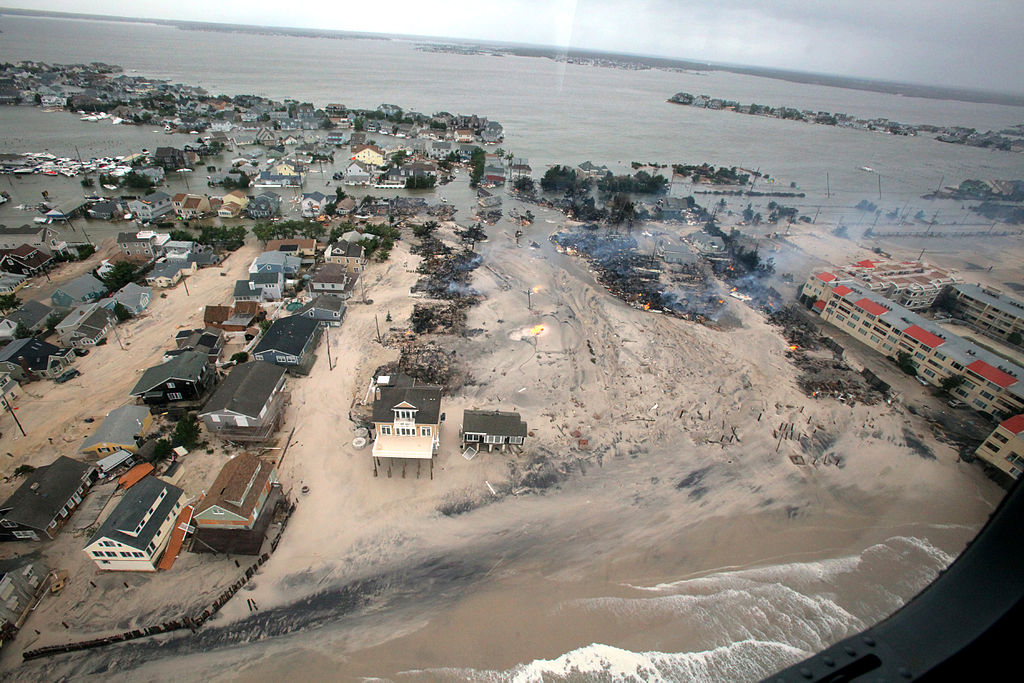
U.S. Air Force photo of Sandy damage to the Jersey Shore.
New Jersey Future has released a report outlining strategies coastal communities can take to respond to the impacts of rising seas and increased flooding. The report is a product of the Sustainable and Resilient Coastal Communities project, funded by the New Jersey Department of Environmental Protection Office of Coastal and Land Use Planning. Read the rest of this entry »