
New Jersey Future Blog
Guide Helps Unlock New Resources for Stormwater Management
March 23rd, 2017 by New Jersey Future staff
This article was written by Kessie Alexandre, a Ph.D. candidate in the Department of Anthropology at Princeton University and an intern at Jersey Water Works.
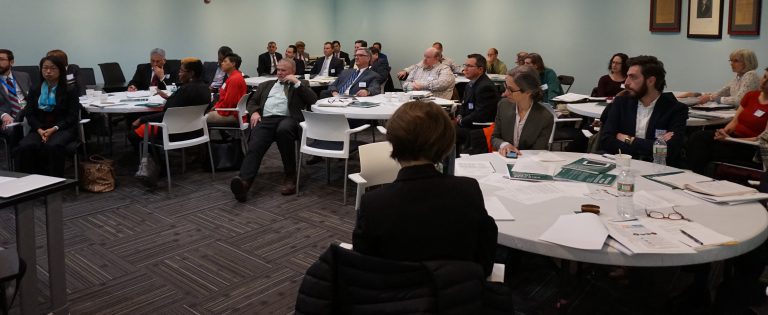
Workshop participants consider possible CSO+ project focus areas including economic development and redevelopment, parking and street upgrades, public housing, public health, energy efficiency, schools, broadband and internet access, and coastal protection.
On March 8, the New Jersey Combined Sewer Overflow (CSO) Permittee Network convened to share lessons and to brainstorm ideas for the future of stormwater management across the state. Held at the North Hudson Sewerage Authority, the meeting included a multimodal CSO+ workshop on “Unlocking Untapped Resources for Addressing CSOs” led by re:focus partners, as well as a presentation on an integrated CSO project already under way in the city of Hoboken. As Andy Kricun, executive director of the Camden County Municipal Utilities Authority, explained, the meeting was “a good opportunity to share information and resources and include different stakeholders.” Read the rest of this entry »
Forum Feature: Federal Redevelopment Tools: Existential Threats, and a Few Opportunities
March 20th, 2017 by Elaine Clisham
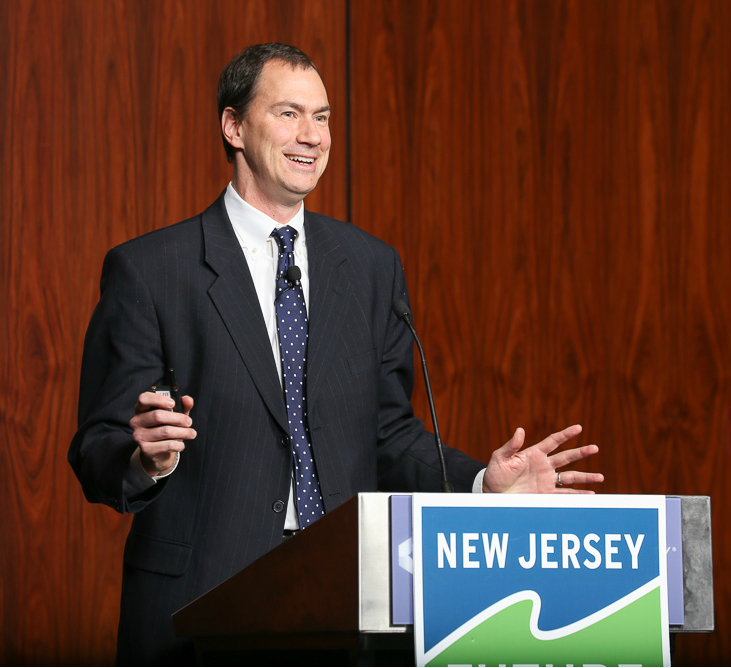
Smart Growth America President and CEO Geoff Anderson
How will the new presidential administration’s policies affect redevelopment at the state level?
At New Jersey Future’s annual Redevelopment Forum, Smart Growth America President and Chief Executive Officer Geoff Anderson provided an overview of where he thought the threats were, and where some potential opportunities lie. Read the rest of this entry »
Forum Roundtable: Getting to a Regional Approach to Coastal Resilience
March 20th, 2017 by David Kutner
 New Jersey has been developing densely and extensively along its 125-mile coast and fragile barrier islands for more than three centuries. Hurricane Sandy was a wake-up call that storms are becoming increasingly frequent, severe and destructive as sea levels rise more and more rapidly. As a result, there is a growing awareness of the need to rethink the state’s development patterns. And because these growing threats ignore municipal borders, they seem to call for a regional response. This roundtable discussion explored what that response might look like and how it could be implemented to help us begin to reimagine our coast. Read the rest of this entry »
Forum Roundup: The Changing Downtown Retail Paradigm
March 20th, 2017 by Allison Kopicki

Downtown Bordentown. Photo courtesy of JGSC Group.
Downtowns across New Jersey are facing a unique set of challenges. While many towns are seeing a rise in the number of people who want to live in a walkable, mixed-use town center, they are also facing the challenges of keeping their downtowns vibrant and full of retail tenants when New Jerseyans increasingly do most of their shopping on laptops and not in stores. Read the rest of this entry »
Forum Roundup: The Future of Parking: Less Parking, Better Management
March 17th, 2017 by David Kutner
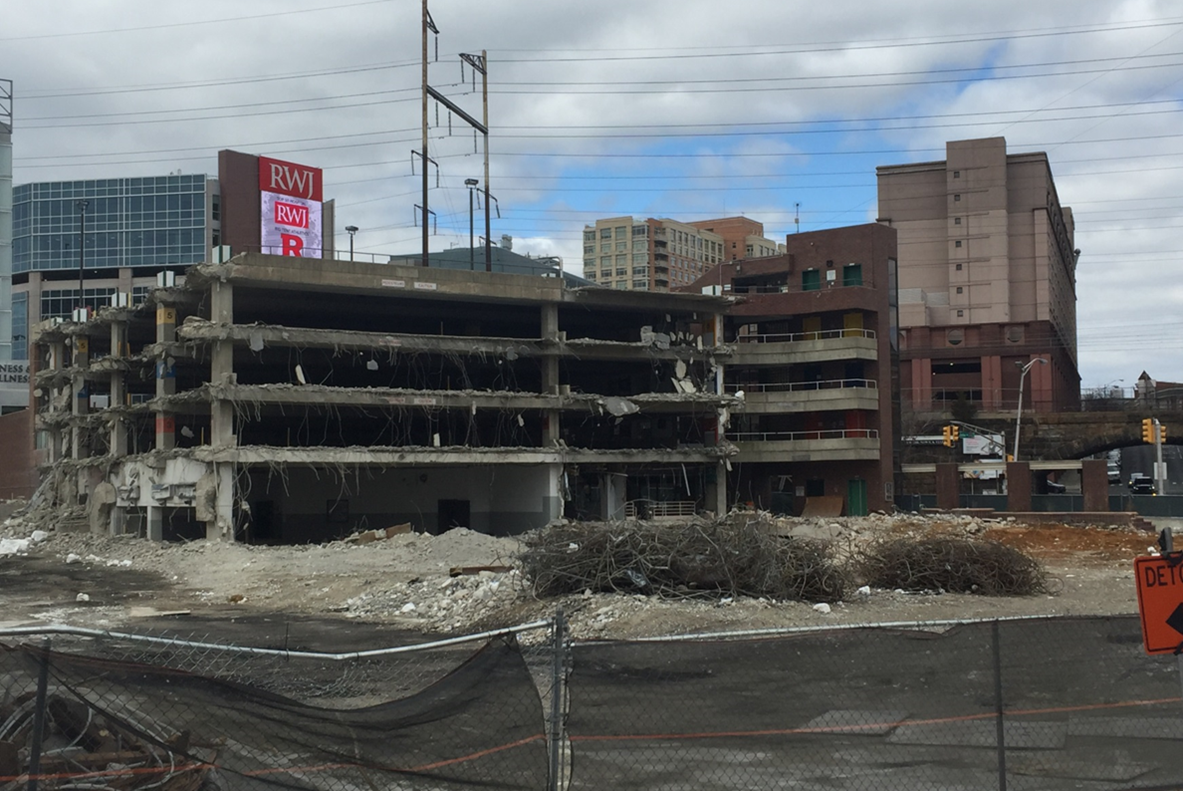
The Ferren Parking Deck in New Brunswick during its recent demolition. Photo courtesy of Jim Zullo, Timothy Haahs & Associates.
If you were planning to build a parking structure, would you invest in a 30-year bond to finance it?
That’s the question Bob Goldsmith, partner and co-chairman of redevelopment and land use for Greenbaum, Rowe, Smith & Davis LLP, posed at the beginning of the Redevelopment Forum session entitled The Future of Parking, Today. The session explored whether the decades-long, ever-expanding demand for parking that has influenced the form of urban areas throughout the country will decline as market forces shift and alternative transportation options proliferate.
John Sullivan (presentation), a place-making activist and board member of Bike & Walk Montclair, suggested that declining parking demand presents an opportunity for communities to reclaim a portion of the public realm. He described changes currently being considered to Montclair’s ordinances that will repurpose areas previously devoted to parking into ever-changing public spaces. He suggested that if towns plan for cars, they get traffic and cars. But if a town plans for places and people, it will get enlivened, inviting public places. Read the rest of this entry »
Recommendations for the Next Governor
March 10th, 2017 by Allison Kopicki
 At its annual Redevelopment Forum, New Jersey Future released an ambitious but pragmatic plan for how the next governor can best utilize and preserve New Jersey’s most valuable assets in order to grow a diverse and durable economy and support residents’ efforts to attain economic security. The plan, called Smart Growth Is Economic Growth, is intended to serve as a set of cost-effective recommendations for the incoming administration on how smart-growth solutions can make the state more economically vibrant and competitive.
Understanding that if the next governor is to set New Jersey back on a path to robust growth, he or she will need to address the state’s most challenging problems — high housing costs, crumbling infrastructure, a neglected transit system, the state’s increasing vulnerability to climate change, and a growing fiscal crisis. The recommendations focus on ways to streamline and coordinate both governance and investment, and to empower communities with the information, tools and incentives they need, in order to maximize growth. Read the rest of this entry »
Planning for Sea-Level Rise VII: Disclosure
February 21st, 2017 by New Jersey Future staff
This series of articles was written by New Jersey Future intern Connor Montferrat.
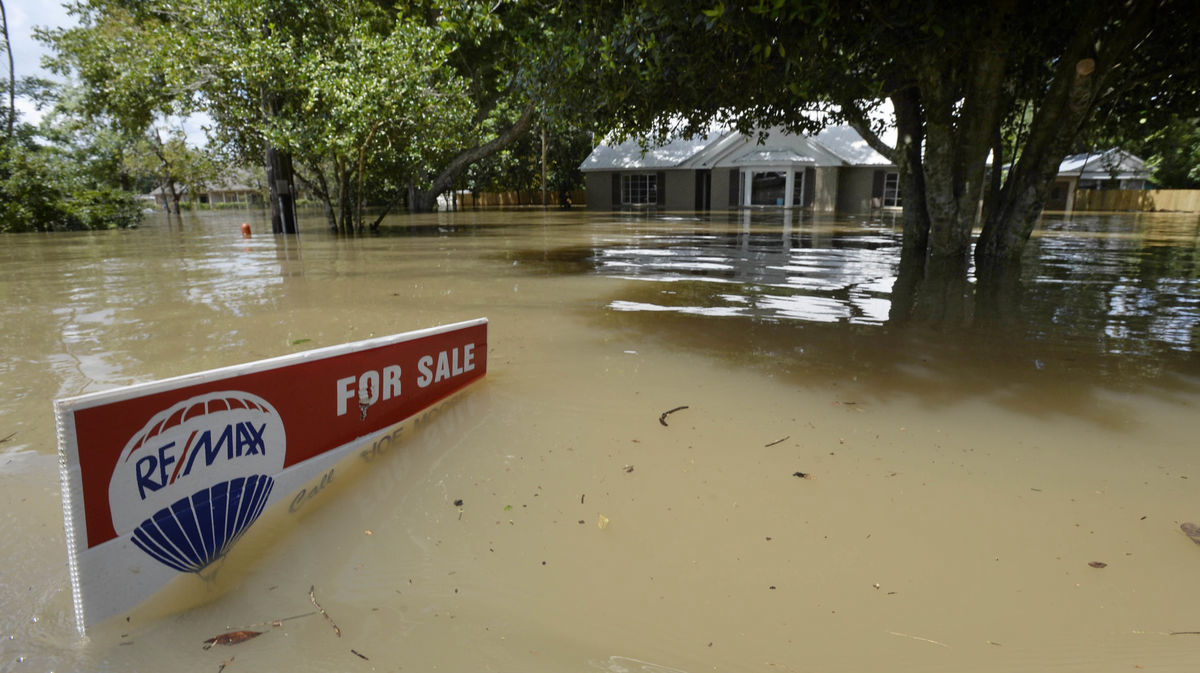 This is the seventh of a series of posts that will examine strategies being used in states throughout the country to reshape development patterns in response to risks posed by rising sea levels and a changing climate. The objective of the series is to present practical and tested adaptation and mitigation approaches that New Jersey communities might use to help respond to the growing threat presented by our subsiding and eroding coastlines, increasingly frequent and severe storms, and mounting flood risks.
This article considers requirements for disclosure of a property’s vulnerability to flooding. Read the rest of this entry »
Planning for Sea-Level Rise VI: Tax Districts
February 17th, 2017 by New Jersey Future staff
This series of articles was written by New Jersey Future intern Connor Montferrat.
 This is the sixth of a series of posts that will examine strategies being used in states throughout the country to reshape development patterns in response to risks posed by rising sea levels and a changing climate. The objective of the series is to present practical and tested adaptation and mitigation approaches that New Jersey communities might use to help respond to the growing threat presented by our subsiding and eroding coastlines, increasingly frequent and severe storms, and mounting flood risks.
This article considers the use of special tax districts to fund risk-related services. Read the rest of this entry »
Planning for Sea-Level Rise V: Overlay Zones
February 16th, 2017 by New Jersey Future staff
This series of articles was written by New Jersey Future intern Connor Montferrat.
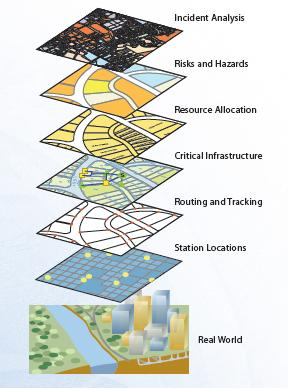
Examples of overlay zones.
This is the fifth of a series of posts that will examine strategies being used in states throughout the country to reshape development patterns in response to risks posed by rising sea levels and a changing climate. The objective of the series is to present practical and tested adaptation and mitigation approaches that New Jersey communities might use to help respond to the growing threat presented by our subsiding and eroding coastlines, increasingly frequent and severe storms, and mounting flood risks.
This article considers the use of overlay zones to delineate and regulate areas at risk. Read the rest of this entry »
Planning for Sea-Level Rise IV: Changes to Building and Site Standards
February 8th, 2017 by New Jersey Future staff
This series of articles was written by New Jersey Future intern Connor Montferrat.
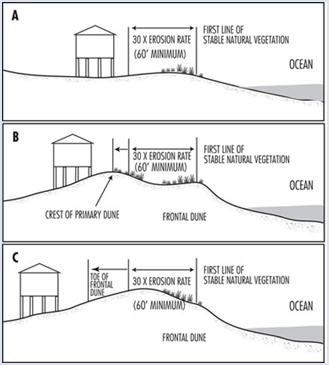
Increased setbacks can keep structures safer from rising seas.
This is the fourth of a series of posts that will examine strategies being used in states throughout the country to reshape development patterns in response to risks posed by rising sea levels and a changing climate. The objective of the series is to present practical and tested adaptation and mitigation approaches that New Jersey communities might use to help respond to the growing threat presented by our subsiding and eroding coastlines, increasingly frequent and severe storms, and mounting flood risks.
This article considers changes to building and site standards to address risk. Read the rest of this entry »