
New Jersey Future Blog
Population Trends at the Jersey Shore, Part 2: The Sandy Effect
November 1st, 2016 by Tim Evans
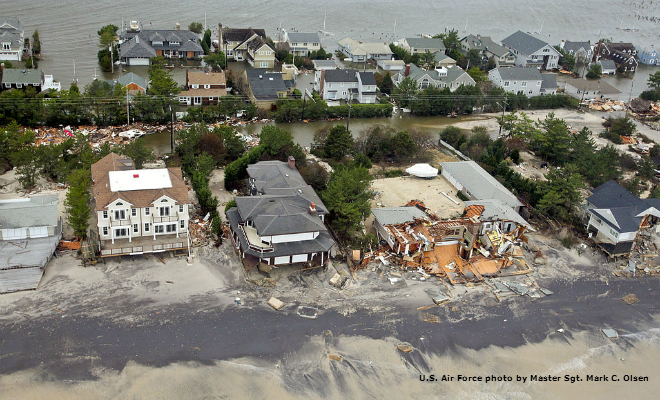 Four years ago Hurricane Sandy devastated our region, raising new questions about the vulnerability of our coastal communities and what the future might hold for businesses and residents at the Shore. In this second of two articles, New Jersey Future intern Sarah Koenig looks at population and housing trends since October of 2012, using the 2012 and 2014 (the most recent available) versions of the American Community Survey to approximate the post-Sandy period. (Part 1 of the findings addressed longer-term trends revealed in the data that pre-date Sandy.)
As described in Part 1, we defined “the Shore” as the set of all municipalities that fall wholly or partially within the jurisdiction of the Coastal Area Facilities Review Act (CAFRA) and then further assigned each of these municipalities to one of three locational groups, based on which body of water it primarily borders: 1) Atlantic oceanfront; 2) bays and other coastal areas; and 3) non-coastal but tidal riverine areas. Read the rest of this entry »
Documentary Featuring Sea Bright, New Jersey Future Is Ocean Film Festival Finalist
October 20th, 2016 by David Kutner
 Barrier island communities, particularly vulnerable to the risk of flood inundation, are on the front line of impact along the New Jersey coast as sea levels rise, storms become more intense and storm surges like Sandy occur more often. Read the rest of this entry »
Population Trends at the Jersey Shore, Part 1: Long-Term
October 17th, 2016 by Tim Evans
Prompted by an article in June about how the Jersey Shore was losing population (specifically, losing year-round residents), New Jersey Future intern Sarah Koenig spent some time delving into the Census Bureau’s municipal population, housing, and income numbers, to see if the data could yield some insight into what might be the driving forces behind the population loss.

Area under CAFRA jurisdiction is outlined in red. Click on image for larger version.
The findings reported here focus on the period beginning in 2000, since that is when the declines in year-round population began and also when the other changes in the data began appearing. Part 2 of the findings, to be released in two weeks, will concentrate specifically on the post-Hurricane Sandy period from 2012 to 2014. Read the rest of this entry »
New Jersey Recovery Fund Shares Post-Sandy Resiliency Lessons With Chinese Delegation
October 12th, 2016 by New Jersey Future staff
This article originally appeared on the Geraldine R. Dodge Foundation blog, and is cross-posted here with permission.

Members of the Guangxi Zhuang Autonomous Region Emergency Management Office met Sept. 29 with representatives from the New Jersey Recovery Fund at the offices of the Geraldine R. Dodge Foundation.
A delegation of Chinese officials made a stop in Morristown recently to learn how New Jersey’s philanthropic sector helped strengthen communities for the long term following Hurricane Sandy.
The visit on Sept. 29 was part of the Guangxi Zhuang Autonomous Region Emergency Management Office’s 21-day trip to Washington, D.C., and New York to hear innovative approaches to disaster response. The trip included meetings with officials from FEMA, the Government Accountability Office, the New York City mayor’s office and the New York Fire Department.
At the Geraldine R. Dodge Foundation’s office, the 20-member delegation heard from representatives from the New Jersey Recovery Fund, a joint effort among local and national foundations, corporations, and individuals that united after Sandy. Immediately after the storm slammed into New Jersey’s coast, the New Jersey Community Foundation established the fund and partnered with Dodge to raise more than $7 million, which was quickly awarded to 25 recovery projects led by partners spanning environmental, media, education, arts, housing, and planning organizations. Read the rest of this entry »
What Can 23 Cents Buy?
October 5th, 2016 by Peter Kasabach
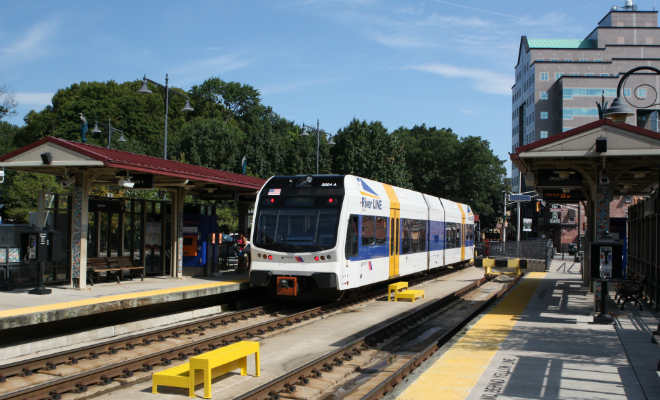
The state Legislature is poised to approve a 23-cent gas tax increase along with a host of tax cuts. The increase in the gas tax revenue should enable a number of positive things to happen in New Jersey, but only if state leaders commit to the following: Read the rest of this entry »
NJ Spotlight on Cities Looks Toward an Urban Agenda for New Jersey
September 28th, 2016 by New Jersey Future staff
New Jersey Future is a partner for this event focused on the state’s cities.
 What is the future of New Jersey cities? What policy matters should our leaders address? What does a Garden State urban agenda look like?
Some of the state’s biggest influencers and advocates will consider these questions when they come together Oct. 14 to tackle these questions at NJ Spotlight On Cities.
NJ Spotlight On Cities 2016 follows up on last year’s inaugural event, offering attendees the opportunity to explore its interdisciplinary nature and to make connections with people from a variety of fields who were all working towards the goal of improving New Jersey’s urban centers. Read the rest of this entry »
Explainer: How to Think About New Jersey’s Population (and Income) Growth
September 14th, 2016 by Tim Evans
As an organization dedicated to using our land wisely, New Jersey Future has a great interest in whether the state’s population is increasing or decreasing, and by how much, and in what parts of the state. A rapidly increasing population means increasing development pressures on our towns, cities and remaining open spaces, while a declining population raises questions about what to do when economic and demographic changes render an industry or a development type obsolete. Both scenarios have implications for infrastructure investment priorities and place-based growth incentives. Therefore, it is important to understand the full picture of population growth or decline in our state. Read the rest of this entry »
School District Regionalization: The Land-Use Connection
August 22nd, 2016 by Tim Evans
 Will school district consolidation save New Jersey taxpayers money? It might, but equally important, it might lead to better land-use decisions that preserve open space, reinvigorate downtowns and main streets, and relieve the pressure on towns to expand sprawling infrastructure. This article delves into and explains the little-understood relationship between how we pay for our schools in New Jersey and the land-use development decision-making our local leaders get backed into making. Spoiler alert: A move to more regional school districts would diffuse the fiscal effects of land development and allow local officials to concentrate less on “What ratable do we need?” or “How many school kids is this development going to generate?” and more on “What land uses are best for our community?”
Read the full article.
Lead Found in School Drinking Water Across New Jersey
August 10th, 2016 by New Jersey Future staff
This article was written by New Jersey Future 2016 summer intern Rachel Host.
Online sources show 137 public schools in New Jersey have tested positive for lead in at least one drinking water outlet this year.

Photo Source: Pixabay
Lead in drinking water is a serious concern that has come to the public’s attention recently with the crisis in Flint, Michigan, and subsequent discoveries of lead contamination in other cities around the country. New Jersey is not immune to this problem, and lead has been discovered in drinking water across the state. Read the rest of this entry »
Jersey Water Works Membership Meeting: Collaboration Is the Key
July 28th, 2016 by Elaine Clisham
“If it looks like water, it’s water.”

Former Philadelphia Water Company Commissioner Howard Neukrug highlights the One Water concept during his talk at the Jersey Water Works membership meeting. Photo credit: Rachel Host.
Former New Jersey Gov. and U.S. EPA Administrator Christie Whitman started the Jersey Water Works’ inaugural membership meeting July 25 by highlighting the scope of the problem we face. “We can’t make any more water,” she said, and our infrastructure systems are old, leaking, unsafe and, in New Jersey, particularly susceptible to the threat of climate change. No one entity can fix it alone, she continued, so it’s going to have to be “all of us.” Results will only come via the kind of collaboration at all levels that Jersey Water Works is fostering. Read the rest of this entry »