New Jersey Future Blog
Green Infrastructure Taking Off in Paterson
February 18th, 2016 by Max Brekke
Paterson SMART provides forum for coordination
The City of Paterson, or Silk City, is not only one of New Jersey’s most densely populated cities but also home to 24 of 212 combined sewer overflows (CSOs) in New Jersey. These combined sewer overflows can be overwhelmed during heavy rain events, dumping raw sewage into the Passaic River watershed and creating a serious public and environmental health threat. Fortunately, in Paterson there are many groups dedicated to reducing the amount of stormwater that flows into the sewer system.
 Paterson SMART The Collaborative
Paterson SMART is a partnership of about 21 members, created in January 2015 to address flooding and new CSO permits from the New Jersey Department of Environmental Protection. With meetings convened jointly by Rutgers Cooperative Extension Water Resources Program and NY/NJ Baykeeper, member organizations of Paterson SMART identify opportunities for green infrastructure that not only reduce stormwater flows but also offer multiple community benefits. Read the rest of this entry »
New Zoning Codes: More Housing Options, More Mixed Use, Less Parking
February 9th, 2016 by Elaine Clisham
A look at updated zoning codes from several Northeast cities shows some common strategies to use their land more flexibly to meet changing needs.
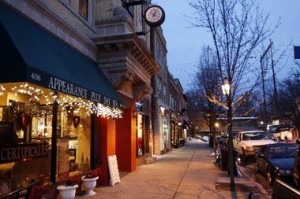
Mixed-use development near Metuchen’s train station. Photo source: nj.com
In what in each case was a long, uphill fight, three cities in the Northeast have updated their zoning codes. (Washington, D.C., and Hartford, Ct., have passed their codes at least in part; Baltimore’s is still awaiting adoption.) And while each new code is in many ways unique to the place it regulates, there are several important themes running through all three that municipalities everywhere can learn from and implement, including:
More flexible housing options. Washington, D.C., is making it easier to rent out accessory apartments, and is streamlining the permitting process for conversion of things like garages to housing units. Baltimore will permit areas around transit to be designated for higher-density, lower-parking residential development, and will allow disused industrial buildings to be converted to artist live-work space. The city is also looking at what kind of streamlining would be appropriate for conversion of single-family row houses to multi-family. Read the rest of this entry »
Flint’s Wake-Up Call for New Jersey — and the Nation
February 5th, 2016 by Chris Sturm
 What does the water crisis in Flint mean to New Jersey?
New Jersey communities are not experiencing Flint’s dire public-health crisis. However, while our water systems are better managed and regulated, they share many of the same underlying issues, and are crying out for action.
Children in Paterson, Clifton, Passaic, Prospect Park and Woodland Park, for example, face potential health impacts from lead fixtures and service lines. Our Ripple Effects report describes the impacts in Paterson in particular. Customers of the water purveyor, the Passaic Valley Water Commission (PVWC), experience lead levels at the tap at a frequency that routinely approach or (in 2012) exceed regulatory “action levels.” The action level is only triggered when more than 10 percent of water samples contain lead. So even though PVWC met the overall regulatory requirement for lead in 2013 and 2014, sampling data indicate that some users’ water exceeded the federal limits. This happens when on-site plumbing materials or service lines contain lead. In response, the commission has been treating water with corrosion-control chemicals to limit leaching of lead wherever it might occur. It has run a public-awareness and education program and offers its customers information on a number of Steps … to Limit Your Exposure to Lead in Your Water. Meanwhile public schools have at times warned students not to use the water fountains. Read the rest of this entry »
Bayside Flooding Highlights Inherent Vulnerability of Barrier Islands
January 27th, 2016 by New Jersey Future staff
Flood waters that swept into some South Jersey coastal towns from the bay side of the barrier islands last weekend highlighted their vulnerability to nor’easters and rising sea levels. But those communities will be hard-pressed to prevent it from happening again, local residents and business owners said. The state is looking at ways it can build… Read the rest of this entry »
Overcoming Developer Obstacles to Redevelopment
January 26th, 2016 by Elaine Clisham
As buildable land becomes scarce in New Jersey, redevelopment is becoming an increasingly important vehicle for accommodating future growth. A new report looks at ways to make redevelopment projects easier and less risky.
 For the report, Redeveloping the Norm: Identifying and Overcoming Developer Obstacles to Redevelopment in New Jersey, the author surveyed mid- to large-size developers who have significant experience in the intricacies of redevelopment projects, to identify what they considered the key cost and risk drivers of greenfield vs. redevelopment projects. While no two projects are alike, the report identified several key components of a typical redevelopment project that represent opportunities to lower costs and reduce risk, including: Read the rest of this entry »
Fixing Flooding in Communities Through Collaboration
January 22nd, 2016 by Max Brekke
Camden Receives National Acclaim
Earlier this month, the Camden County Municipal Utilities Authority’s green and grey infrastructure projects earned national recognition from the Environmental Council of the States. The national acclaim is a result of a competition for the top three most innovative uses of the United States Environmental Protection Agency’s Clean Water State Revolving Fund (CWSRF) since the fund’s origin in 1987. Read the rest of this entry »
New Jersey Future Trustee Inducted Into Business Hall of Fame
January 19th, 2016 by Elaine Clisham

Caren Franzini
Caren Franzini, the former chief executive officer of the New Jersey Economic Development Authority, was inducted in December into the NJBIZ Business Hall of Fame. The Hall of Fame honors “individuals who have demonstrated the highest commitment to strengthening their industries, supporting their employees and giving back to their communities.”
“Everywhere you go in New Jersey, you see evidence of Caren Franzini’s outstanding and consistent work at the Economic Development Authority,” said NJBIZ Publisher Tom Curtin. “The number of businesses that have started here, grown here, stayed here or moved here as a result of Caren’s efforts is a testament to the depth of her commitment to an economically vibrant Garden State, and to her expertise in making that vision a reality.” Read the rest of this entry »
Smart Growth in the Somerset Hills
January 13th, 2016 by Elaine Clisham

Bedminster Mayor Steve Parker
If two recent news articles are any indication, change could be coming to parts of the Somerset Hills.Two neighboring municipalities are discussing putting smart-growth principles to work in order to boost their local economies.
At Bedminster’s annual reorganization meeting, Mayor Steve Parker stressed that the soft local business climate is continuing to put financial pressure on residential taxpayers, and he encouraged residents to be open to the idea of modest “smart growth” as a way of fueling the local economy. He is asking the township’s professionals to compare Bedminster’s residential code with those of similar nearby municipalities, to make sure it is not out of step, and to offer proposals to encourage what he called “reasonable residential and business growth.” Read the rest of this entry »
Sewage Overflow Warning Signs Popping Up
January 7th, 2016 by Max Brekke

Sign warns residents to avoid this Newark Outfall at the Passaic River. Photo courtesy of the City of Newark.
Twenty-four-inch by 18-inch warning signs have been popping up along waterways throughout New Jersey. “Warning” or “Aviso” can be read in bold red letters, advising community members to steer away from nearby waters during rain events that might cause combined sewer overflows (CSOs). During rain events at these sites, raw sewage can flow into waterways, causing significant environmental harm and threatening human health. The two required signs at each of the 213 CSOs in New Jersey allow fishermen, boaters and other recreational water users to avoid harmful contact and illness. Read the rest of this entry »
Conference Pinpoints Water as Defining Issue for Next Generation
December 15th, 2015 by Elaine Clisham
New collaborative introduced; will focus on upgrading water infrastructure
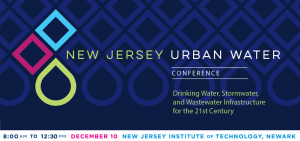 At the inaugural New Jersey Urban Water Conference on Dec. 10, speaker after speaker stressed the importance of water to healthy communities and economic vitality in New Jersey’s cities and towns, and cited numerous examples of how New Jersey’s inadequate water infrastructure threatens to hamper that vitality. Whether it’s a water-main break that prevents people from patronizing a restaurant, or rain-related flooding that keeps children away from school, it was clear that water management is both an economic-development problem and a neighborhood problem.
Much of the water infrastructure in New Jersey’s cities and towns is old and no longer adequate for the demands being placed on it, which means these places face the daunting challenge of finding ways to pay for necessary upgrades. In places like Camden, as Cooper’s Ferry Partnership Chief Executive Officer Anthony Perno pointed out, redevelopment projects can include water infrastructure improvements. And in many places, improving the efficiency with which water systems operate can reduce losses and realize cost savings. Read the rest of this entry »